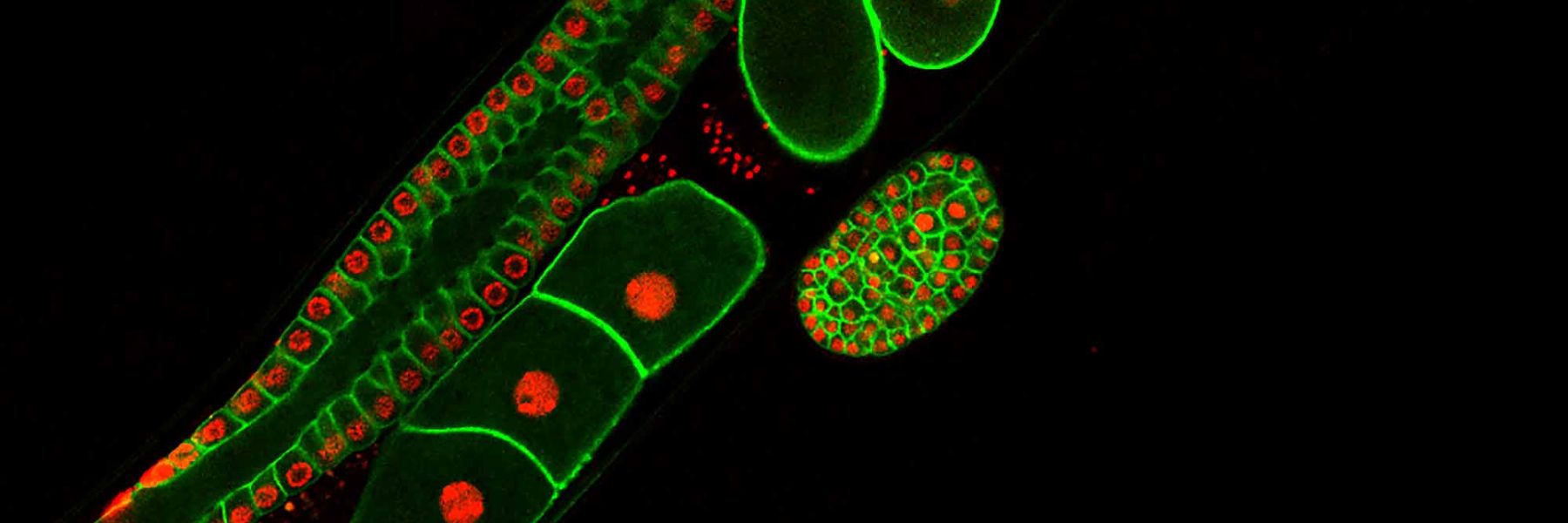
Researchers in MCDB are using genetic and genomic tools to investigate fundamental questions of cell and developmental biology in a wide variety of plant, microbial, and animal organisms. Research teams are investigating both established model systems, such as mice, nematodes, and the plant Arabidopsis, as well as a number of emerging marine model organisms. Ongoing genetic studies are shedding new light on the mechanisms underlying cancer, organ development, regeneration, fertilization, cell signaling, transcriptional regulation, and microbial pathogenesis (among others). Research teams in MCDB have played important roles in genome projects including those for the ciliate protozoa Tetrahymena, the ascidian Ciona savignyi, and the marine sponge Amphimedon queenslandica. MCDB is home to organized genetic resource centers for Tetrahymena and Ciona. Facilities available to genetic and genomic researchers includes on site next-generation sequencing, a shared state of the art microscopy facility, and extensive resources for the study of marine organisms.

Molecular biology of plant secondary metabolism; biochemistry of ethylene synthesis.
Molecular cell biology of plant-microbe symbiosis, structure and function of plant cell walls, bioinformatics of tandem repeat proteins.
Molecular mechanisms of self/non-self recognition in non-vertebrates; characterization of stem cells and development processes underlying regeneration and aging.
Molecular genetics of plant development; analysis of abscisic acid signaling networks.
Molecular genetics and biochemistry of bacterial contact-dependent growth inhibition (CDI) systems; mechanisms of tmRNA- and ArfA-mediated ribosome rescue.
Neural plasticity including the molecular basis of plasticity, the evolution of synapses, and disease-related impairments of plasticity such as occurs in Alzheimer's disease.
Cellular communication between bacteria, including mechanisms and biology of contact-dependent growth inhibition; epigenetic gene regulatory mechanisms.
Microbial pathogenesis; innate and adaptive immune responses to infection; vaccine development.
Bio-inspired catalytic nanofabrication, tunable photonic materials and dynamic self-assembly. Applications to semiconductors, high-power batteries, electro-optics, IR and solar energy.
Tetrahymena genetics and genomics; genetic, physical and sequence mapping of the germline and expressed genomes of the unicellular eukaryote, Tetrahymena thermophila.
Molecular genetics of Drosophila development, focusing on genes with dominant misexpression phenotypes in adult bristles. Bioinformatic analyses of contact-dependent growth inhibition systems in diverse bacterial species.
Molecular and genetic control of development in the nematode C. elegans; regulation of programmed cell death; mechanisms of tumorigenesis.
Antiviral innate immunity and interferon action, with focus on the roles of double-stranded RNA in translational control by the PKR kinase and A-to-I RNA editing by the ADAR1 deaminase.
Molecular, Cellular, and Developmental Biology •
University of California, Santa Barbara
Copyright © 2012 The Regents of the University of California, All Rights Reserved.
Site Information •
Terms of Use •
Privacy •
Login