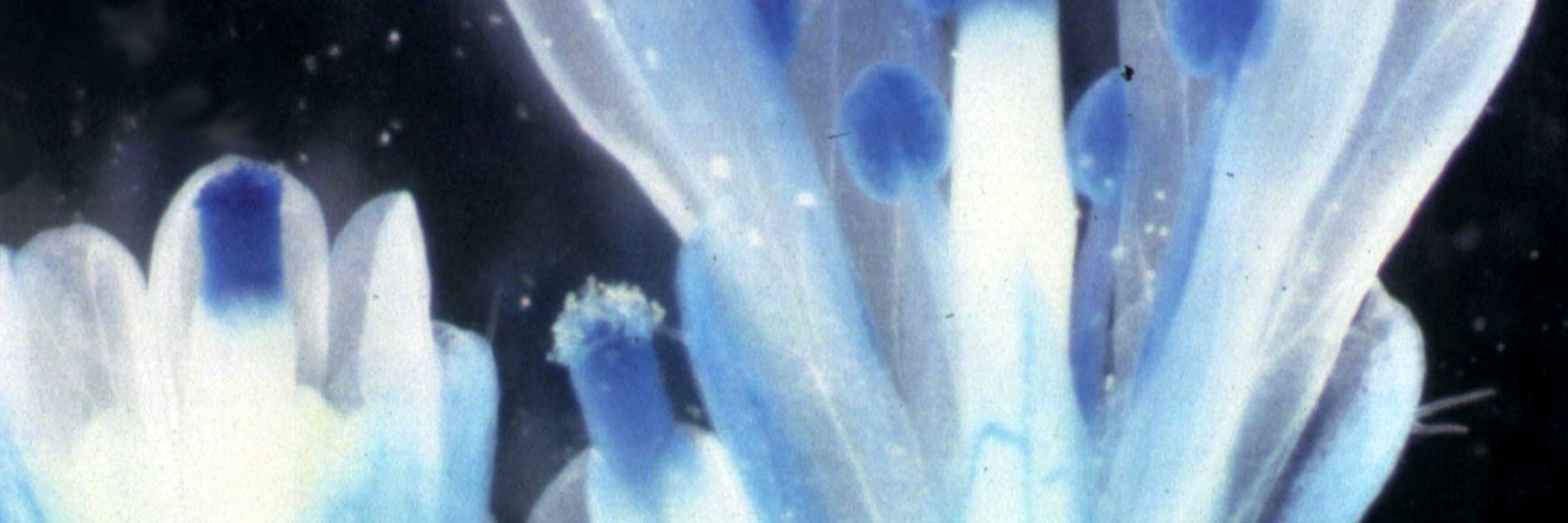
Plant biologists in MCDB study mechanisms controlling plant growth and development in response to internal and environmental signals, and plant interactions with other organisms. These studies focus on gene networks controlling hormonal regulation of seed development and stress responses, plant cell wall proteins thought to play important roles in plant development and plant-microbe symbiosis, and biosynthesis of plant volatiles such as floral aromas involved in pollinator attraction. Members of the plant biology group use diverse approaches including biochemistry, cell biology, genetics and genomics, and RNA profiling to study model plants such as Arabidopsis and Medicago truncatula. MCDB researchers have also developed algorithms and software to exploit the rapidly-expanding genomic and metagenomic sequence databases to discover new biostructural Tandem Repeat proteins, many of which form important biomaterials in animals as well as plants. In addition, MCDB's plant biologists collaborate locally with researchers in EEMB, Chemistry, and Computer Science and Mechanical Engineerng, as well as with numerous laboratories around the world.

Molecular biology of plant secondary metabolism; biochemistry of ethylene synthesis.
Molecular cell biology of plant-microbe symbiosis, structure and function of plant cell walls, bioinformatics of tandem repeat proteins.
Molecular genetics of plant development; analysis of abscisic acid signaling networks.
Molecular, Cellular, and Developmental Biology •
University of California, Santa Barbara
Copyright © 2012 The Regents of the University of California, All Rights Reserved.
Site Information •
Terms of Use •
Privacy •
Login