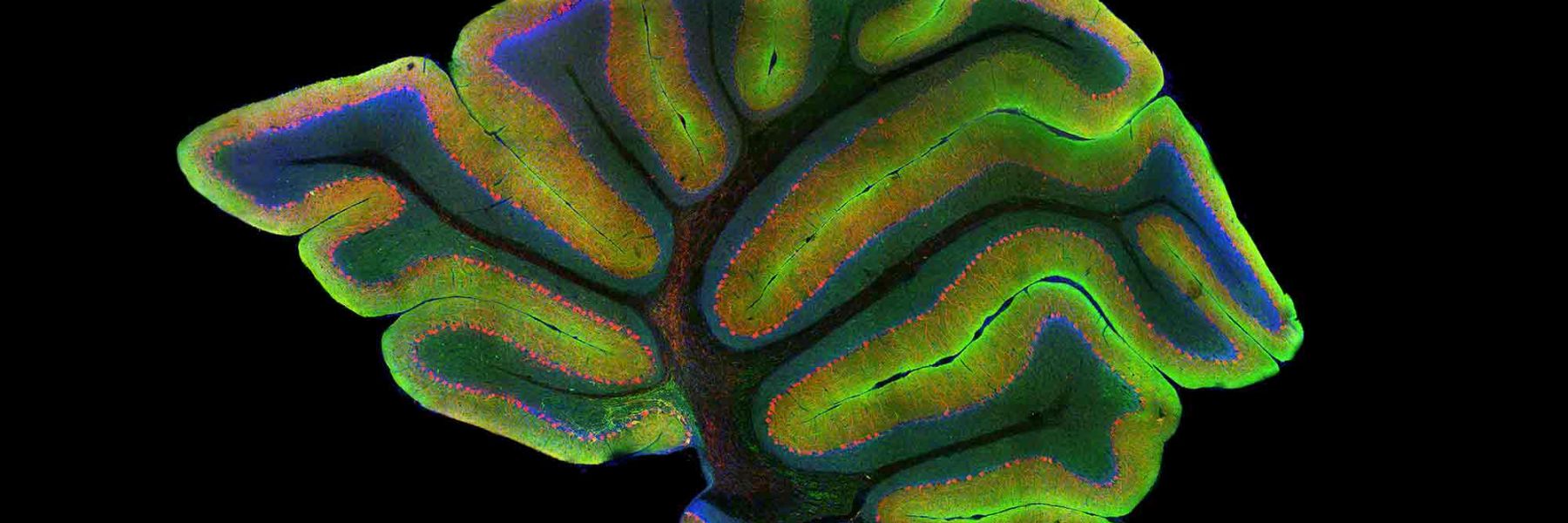
Neurobiology research in MCDB is a remarkably broad-based, collaborative and interdisciplinary endeavor. Employing the state-of-the-art strategies and technologies of biophysics, biochemistry, molecular biology and cell biology, our students and faculty investigate exciting issues ranging from the development of the nervous system to its function, from the demise of the nervous system in neurodegenerative conditions (such as Alzheimer's, Macular Degeneration and retinal detachment) to the regeneration of the nervous system using stem cell biology and regenerative medicine, from molecular mechanisms underlying intracellular protein trafficking to drug addiction to cancer to signal transduction. Our work focuses upon many fascinating specific features of neural cells, including microRNAs, the microtubule associated protein tau, kinase action and regulation, the neuronal cytoskeleton, ion channel structure and function, chromatin structure and axonal transport. Our many UCSB collaborators come from all over the campus including the Departments of Chemistry, Psychology, Physics, Materials, Computer Science as well as the College of Engineering.
Human stem cell research; Molecular mechanisms of stem cell differentiation; Derivation of ocular cells from stem cells; Soft tissue regeneration.
Biochemistry and Cell Biology of Neuronal Development; Biochemistry of Neurodegenerative Diseases; Structure, Function and Regulation of the Microtubule Associated Protein, Tau; Cytoskeletal Regulation.
Structure and function in the vertebrate retina with an emphasis on mechanisms underlying photoreceptor degeneration and the role of glial cells in normal and injured or diseased retina.
Neural plasticity including the molecular basis of plasticity, the evolution of synapses, and disease-related impairments of plasticity such as occurs in Alzheimer's disease.
Molecular mechanisms of signal transduction; Alzheimer's Disease and other protein aggregation/misfolding diseases; molecular biology, enzymology, and protein structure/function.
Molecular and genetic control of development in the nematode C. elegans; regulation of programmed cell death; mechanisms of tumorigenesis.
Cell biology of the nervous system and muscle. Mechanisms of ion channel trafficking; function and regulation of potassium channels; polarized targeting of membrane proteins and neuronal cell polarity.
Investigation of molecular mechanisms underlying polycystic kidney disease (PKD) and related renal diseases. Membrane trafficking and epithelial cell polarity.
Mechanism and regulation of microtubule polymerization and dynamics; mechanism of action of microtubule-targeted anticancer drugs and microtubule-regulatory proteins.
Molecular, Cellular, and Developmental Biology •
University of California, Santa Barbara
Copyright © 2012 The Regents of the University of California, All Rights Reserved.
Site Information •
Terms of Use •
Privacy •
Login
