logo

Search form

Main menu

  • Home
  • Overview
  • People
  • Research
  • Graduate
  • Undergraduate
  • News
  • Events
  • Support
  • Giving

You are here

Home » People » Faculty
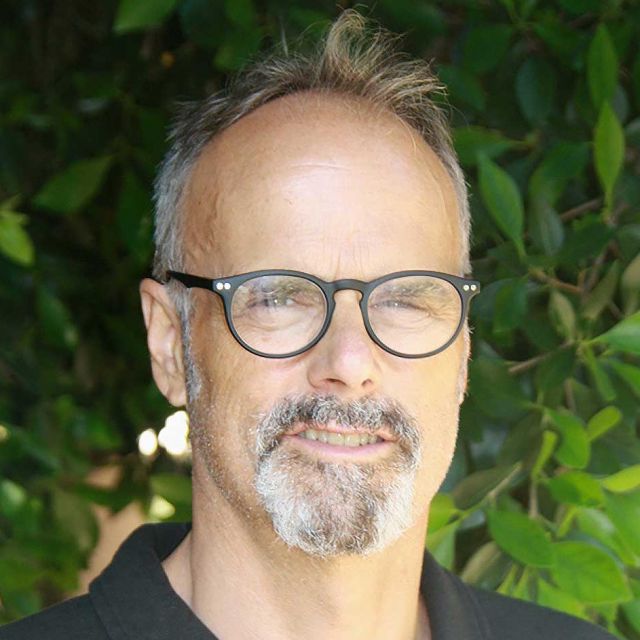
Photo

Anthony De Tomaso

Associate Professor

Contact Information

Phone: (805) 893-7276
Email: anthony.detomaso@lifesci.ucsb.edu
Office: 1107 LSB

Address

Molecular, Cellular, and Developmental Biology
University of California, Santa Barbara
Santa Barbara, CA 93106-9625

Bio

Dr. De Tomaso received his BS degree in Biology from Stanford University and his PhD in Cellular and Molecular Biology at Washington University School of Medicine in St. Louis. His doctoral thesis focused on understanding the mechanisms of multi-subunit protein assembly and targeting, using the rodent Na,K-ATPase. Following completion of his PhD, Dr. De Tomaso was a NIH fellow in the laboratory of Irv Weissman at Stanford University, where he worked on both delineating the molecular mechanisms which underlie allorecognition in the primitive chordate, Botryllus schlosseri, as well as understanding the cellular and molecular basis of regeneration in this organism.

Research

Research in our lab is based around the phenomenon of self/non-self recognition (allorecognition) in a primitive chordate organism, Botryllus schlosseri. This allorecognition reaction links a number of disparate fields, including immunology, stem cell, developmental, and evolutionary biology, and also has ecological consequences. Several unique aspects of the Botryllus life history make it a novel, experimentally accessible model organism to ask pertinent questions in these distinct disciplines.

Botryllus individuals undergo a natural transplantation reaction when they come into contact with other members of the same species. Using a combination of genetic, genomic and cell biological approaches, we are focused on understanding the molecular mechanisms which underlie this reaction, which is similar to the MHC-based allorecognition found in the vertebrates, and functionally resembles the way in which bone marrow transplants are recognized and rejected in mice and humans. This allorecognition system exists to prevent the transplant of blood-borne pluripotent stem cells, which once transferred can parasitize other genotypes, replacing their somatic and/or germline tissues. Parasitic abilities are genetically determined and autonomous to the cells themselves, and we are studying the mechanisms which underlie these properties. Transplanted stem cells are able to parasitize other individuals because the adult body plan of Botryllus is colonial, and has an asexual reproductive pathway that can regenerate adult individuals through an independent developmental program lacking any embryonic stages-the only chordate which can do so. The developmental pathways which control the expansion, differentiation, and patterning of asexual regeneration are unknown, and we are studying this process using a variety of techniques. Botryllus occupies a key position in vertebrate evolution, and these studies may provide insights into the origins of many chordate innovations.

Selected Publications

  • McKitrick, T.R., Muscat, C, C., Pierce, J.D., Bhattacharya, D. and De Tomaso, A.W. (2011) Allorecognition in a basal chordate consists of independent activating and inhibitory pathways. Immunity 34:61-626.
  • Carpenter, M.A., Powell, J.H., Ishizuka, K., Palmeri, K., Rendulic, S., and De Tomaso, A.W. (2011) Growth and long-term somatic and germline chimerism following fusion of juvenile Botryllus schlosseri. Biol. Bull. 220:57-70.
  • Brown, F.D., Tiozzo, S., Ishizuka, K., Swalla, B.J., and De Tomaso A.W. (2009) Early lineage specification of long-lived germline precursors in the colonial ascidian, Botryllus schlosseri. Development 136:3485-3494.
  • De Tomaso, A.W. (2009) Sea squirts and immune tolerance. Disease Models and Mechanisms 2:440-445.
  • Tiozzo, S., Murray, M., Degnan, B.M., De Tomaso, A.W. and Croll, R.P. (2009) Development of the neuromuscular system during asexual propagation in an invertebrate chordate. Dev. Dyn. 238:2081-2094.
  • Tiozzo, S., De Tomaso, A.W. (2009) Functional analysis of Pitx during asexual regeneration in a primitive chordate Evolution and Development 11:152-162.
  • Tiozzo, S., Voskoboynik, A., Brown, F.B., and De Tomaso, A.W. (2008) A conserved role of the VEGF pathway in angiogenesis of an ectodermally-derived vasculature. Dev. Biol. 315:243-255.
  • Nyholm, S.V., Passegue, E., Ludington, W., Voskoboynik, A., Mitchel, K., Weissman, I.L., and De Tomaso, A.W. (2006) fester, a candidate allorecognition receptor from a primitive chordate Immunity 25:163-173.
  • Laird, D.J., De Tomaso, A.W., and Weissman I.L. (2005) Stem cells are units of natural selection in a colonial ascidian. Cell 123:1351-1360.
  • De Tomaso, A.W., Nyholm, S.V., Ishizuka, K.I., Palmeri, K.P., Ludington, W.B., Mitchel, K and Weissman, IL Isolation and characterization of a protochordate histocompatibility locus. Nature 438:454-459. (2005).

MCDB Research Areas

  • Biochemistry & Biomaterials
  • Biomedical Sciences
  • Cell Biology
  • Developmental & Stem Cell Biology
  • Genetics & Genomics
  • Microbiology & Immunology
  • Systems & Quantitative Biology

Campus Affiliations

  • Marine Science Institute
  • Interdepartmental Graduate Program in Marine Science
  • Center for Stem Cell Biology and Engineering

Awards / Honors

  • Ellison Foundation New Scholars in Aging Award

Molecular, Cellular, and Developmental Biology • University of California, Santa Barbara
Copyright © 2013 The Regents of the University of California, All Rights Reserved.
Site Information • Terms of Use • Privacy • Login