
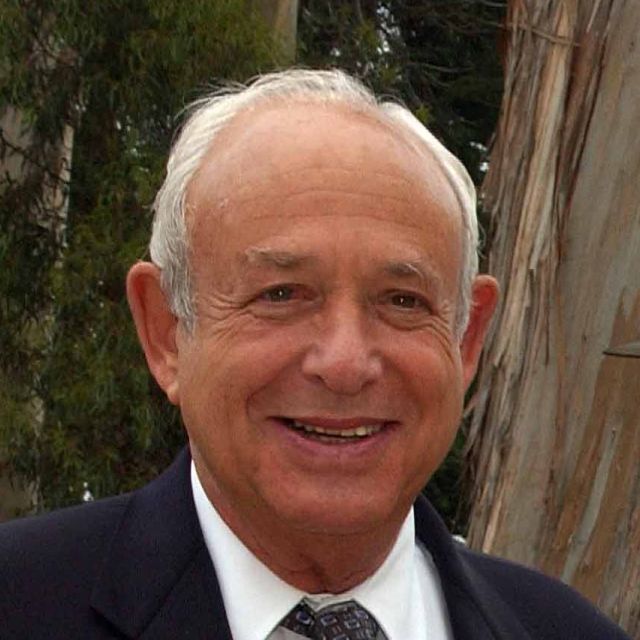
Daniel E. Morse
Related Links
Biography
Dr. Morse received his B.A. in Biochemistry from Harvard, his Ph.D. in Molecular Biology from Albert Einstein College of Medicine, and conducted postdoctoral research in molecular genetics at Stanford University. He was the Silas Arnold Houghton Associate Professor of Microbiology and Molecular Genetics at Harvard Medical School before joining the faculty at UCSB. Honored by Scientific American as one of the top 50 technology innovators of 2006 for his development of bio-inspired, kinetically controlled routes to semiconductor thin films and nanoparticles, Morse was the 7th Kelly Lecturer in Materials and Chemistry at the University of Cambridge and the 3M Lecturer in Chemistry and Materials at the University of Vancouver. Elected a Fellow of the AAAS, the Materials Research Society and the Smithsonian Institution, he received a Career Development Award from the National Institutes of Health, a Faculty Research Award from the American Cancer Society, and honors as Visiting Professor of Bio-Nano-Electronics in Japan and as Visiting Professor at the University of Paris and universities in Singapore and the UK. His students have received international recognition and awards in numerous symposia and international research meetings.
Research
Our research is focused at the interface between molecular biology, molecular genetics and materials science, with original contributions advancing our understanding of the underlying molecular mechanisms controlling gene regulation, enzymatic catalysis, protein assembly, intracellular osmotic pressure, bone structure-function relationships, biomineralization and biophotonics. From our discoveries of the molecular mechanisms controlling biomineralization, we developed the new field of “Silicon Biotechnology,” and a novel bio-inspired method for the low-temperature, low-cost catalytic nanofabrication of a wide range of semiconductors and ferroelectrics. Because this method gives access to structures and activities not attainable by conventional methods, we found it provided new advantages for nanostructured materials for high-power batteries, uncooled IR detectors and information storage. We now are pursuing our discoveries of the remarkable molecular mechanisms governing tunable photonic systems in squids and related organisms, and applications of these findings for electro-optics, IR detectors and improvements in solar energy conversion. Most significantly, we recently discovered how the genetically encoded block copolymeric structure and self-assembly of the reflectin proteins and their resultant emergent properties control the tunable color and brightness of light reflected from the subcellular nanophotonic structures that contain them. As we predicted, we’re able now to translate the neuronal and biochemical control of these processes to tunable control with electricity.
Related Organizations
- UCSB-MIT-Caltech Institute for Collaborative Biotechnologies (ICB)
- Biomolecular Science and Engineering (BMSE)
- BioEngineering (BioEng)
- Marine Science Institute (MSI)
Selected Publications
Levenson, R. C. Bracken, C. Sharma, P. Kohl, Y. Li, J. Santos, C. Arata, and Daniel E. Morse,. 2019. Neutralization of a distributed Coulombic switch precisely tunes reflectin assembly.doi: https://doi.org/10.1101/456442; Submitted to Nature Comms; preprint at BioRxiv.
Dearden, S.J., A. Ghoshal, D. G. DeMartini and D. E. Morse, 2018. Sparkling reflective stacks of purine crystals in the nudibranch, Flabellina iodinea" - Biological Bulletin, 234: 116-129 (+ cover). Morse, D.E. and S.,Johnsen, (Eds.), 2018. Bioinspiration and Biomimetics, Special Issue on Biophotonics and Biologically Inspired Photonics, 13: [https://doi.org/10.1088/ 051001-056006]
Levenson, R., D. DeMartini and D.E. Morse (2017). Molecular mechanism of reflectin’s tunable biophotonic control: Opportunities and limitations for new optoelectronics. Applied Physics Lett. – Materials 5, 104801: 1-12 [http://dx.doi.org/10.1063/1.4985758]
Ghoshal, A., E. Eck, M. Gordon and D. E. Morse. 2016. Wavelength-specific forward scattering of light by Bragg-reflective iridocytes in giant clams. J.R.Soc. Interface 13: 20160285. Levenson, R., C. Bracken, N. Bush and D.E. Morse. 2016. Cyclable condensation and hierarchical assembly of metastable reflectin proteins, the drivers of tunable biophotonics. J. Biol. Chem. 291: 4058-4068. DOI: 10.1074/jbc.M115.686014
DeMartini, D. G., M. Izumi, A. T. Weaver, E. Pandolfi and D.E. Morse. 2015. Structures, organization and function of reflectin proteins in dynamically tunable reflective cells J. Biol. Chem. doi/10.1074/jbc.M115.638254
Rotstein, R. S. Mitragotri, M. Moskovits and D. E. Morse. 2014. Progressive transition from resonant to diffuse reflection in anisotropic colloidal films. J. Polymer Sci. B: Polymer Physics 52: 611-617. Holt, A.L., S. Vahidinia, Y. Gagnon, D. E. Morse and A. M. Sweeney. 2014. Photosymbiotic giant clams are transformers of solar flux. J.R.Soc. Interface 11: 20140678; http://dx.doi.org/10.1098/rsif.2014.0678 - plus cover.
Ghoshal, A. D.G. DeMartini, E. Eck and D. E. Morse. 2014. Experimental determination of refractive index of condensed reflectins in squid iridocytes. J. R. Soc. Interface 11: 20140106; http://dx.doi.org/10.1098/rsif.2014.0106
DeMartini, D.G., A. Ghoshal, E. Pandolfi, A. Weaver, M. Baum, D. Morse. 2013. Dynamic biophotonics: Female squid exhibit Tunable Leucophores and Iridocytes. J. Exper. Biol. 216: 3733-3741.
Ghoshal, A., D. G. DeMartini, E. Eck, and D.E. Morse. 2013. Optical Parameters of the Tunable Bragg Reflectors in Squid. J. R. Soc. Interface 10: DOI: 10.1098/rsif.2013.0386.
DeMartini, D.G., D.V. Krogstad and D. E. Morse. 2013. Membrane invaginations facilitate reversible water flux driving tunable iridescence in a dynamic biophotonic system. Proc. Natl. Acad. Sci. USA 110: 2552-2556 [DO:I 10.1073/pnas.1217260110]

