logo

Search form

Main menu

  • Home
  • Overview
  • People
  • Research
  • Graduate
  • Undergraduate
  • News
  • Events
  • Support
  • Giving

You are here

Home » People » Faculty
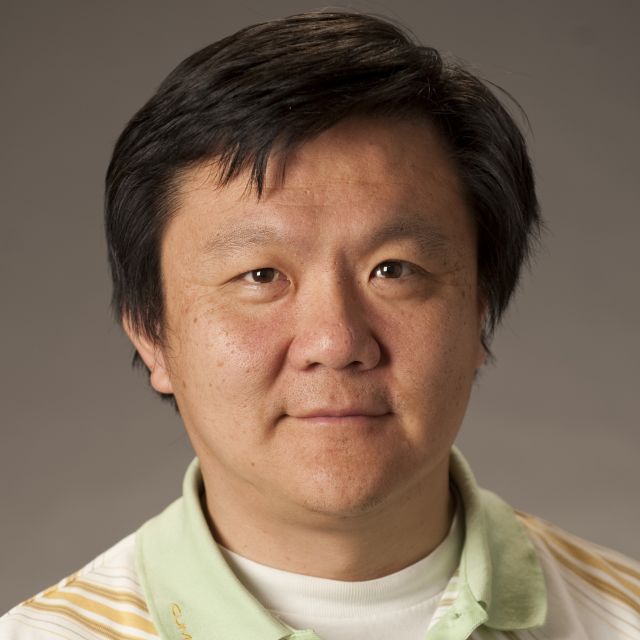
Photo

Dzwokai Zach Ma

Associate Professor

Contact Information

Phone: (805) 893-4745
Email: ma@lifesci.ucsb.edu
Office: 3119 LSB

Address

Molecular, Cellular, and Developmental Biology
University of California, Santa Barbara
Santa Barbara, CA 93106-9625

Bio

I conducted my graduate research at the Chemistry Department of UC Berkeley where I worked on gene regulation and DNA supercoiling in bacteria with Dr. J. Hearst, as well as bacterial multi-drug transporters with Dr. H. Nikaido. I then became a postdoctoral fellow in the group of Dr. Lily Jan at UC San Francisco and studied the trafficking of potassium channels in neurons. I started my research group at UC Santa Barbara in 2004.

Research

The current research in our lab is centered in two areas:

(1) Membrane trafficking/cell migration and histone H3 lysine 4 (H3K4) methyltransferases. Covalent modifications of histones regulate the structure and function of chromatin. Among them, methylation of H3K4 is associated with actively transcribed genes and thus extensively studied. Unexpectedly, we have discovered that a pool of mDpy-30, a common subunit of many H3K4 methyltransferases, resides at the Golgi apparatus and it plays a role in membrane trafficking and cell migration. We are investigating the mechanism by which mDpy-30 regulates these events.

(2) AGS3 and addiction. A major difficulty in the treatment of drug addiction is the prevention of relapse. Whereas AGS3 protein, a G-protein regulator, is implicated in the modulation of recurring cocaine- and alcohol-seeking behavior in animal models of addiction, the cellular event(s) controlled by AGS3 remain incompletely characterized. Our lab has shown a link between AGS3 and Golgi structure/function and we are dissecting the pathway involved. Our long term goal is to elucidate how AGS3 regulates addictive behavior.

Selected Publications

  • B. Xia, A. Joubert, B. Groves, D. Djavaherian, J. Awe, D. Mu, J. Cherfils, and D. Ma. (2010) Modulation of cell adhesion and migration by a histone methyltransferase subunit and its interacting proteins. PLoS One, in press.
  • Z. Xu, B. Xia, Q. Gong, J. Bailey, B. Groves, M. Radeke, S. A. Wood, K. K. Szumlinski, and D. Ma. (2010) Identification of a deubiquitinating enzyme as a novel AGS3-interacting protein. PLoS One, 5, e9725.
  • A. Vural, S. Oner, N. An, V. Simon, D. Ma, J. Blumer, and S. Lanier. (2010) Movement of activator of G-protein signaling 3 within the aggresomal pathway: the role of specific residues in the tetratricopeptide repeat domain and differential regulation by the AGS3 binding partners Gia and mInscuteable. Mol. Cell Biol. 30, 1528-1540.
  • B. Groves, H. Abrahamsen*, H. Clingan, M. Frantz, L. Mavor, J. Bailey, and D. Ma. (2010) An inhibitory role of the G-protein regulator AGS3 in mTOR-dependent macroautophagy. PLoS ONE. 5, e8877.
  • Z. Xu, Q. Gong, B. Xia, B. Groves, D. Mu, M. Seaman and D. Ma. (2009) A Role of histone H3 lysine 4 methyltransferase components in endosomal trafficking. J. Cell Bio. 186, 343-353 (this article has been featured by J. Cell Biol. and Faculty of 1000 Biology)
  • Q. Gong, C. Huntsman, and D. Ma. (2008) Clathrin-independent internalization and recycling. J. Cell. Mol. Med. 12, 126-144.
  • B. Groves, Q, Gong, Z. Xu, C. Huntsman, C. Nguyen, D. Li, and D. Ma. (2007) A specific role of AGS3 in the surface expression of plasma membrane proteins. Proc. Natl. Acad. Sci. U.S.A. 104, 18103-18108.
  • Q. Gong, M. Weide, C. Huntsman, Z. Xu, L. Y. Jan, D. Ma. (2007) Identification and characterization of a new class of trafficking motifs for controlling clathrin-independent internalization and recycling. J. Biol. Chem. 17, 13087-97.

MCDB Research Areas

  • Biomedical Sciences
  • Cell Biology
  • Neuroscience

Campus Affiliations

  • Neuroscience Research Institute
  • Center for Stem Cell Biology and Engineering

Molecular, Cellular, and Developmental Biology • University of California, Santa Barbara
Copyright © 2013 The Regents of the University of California, All Rights Reserved.
Site Information • Terms of Use • Privacy • Login