Professor
Phone: (608) 316-4348
Email: jthomson@morgridgeinstitute.org
Office: 330 N. Orchard St., Madison, WI 53715
Website: Thomson Lab
Molecular, Cellular, and Developmental Biology
University of California, Santa Barbara
Santa Barbara, CA 93106-9625
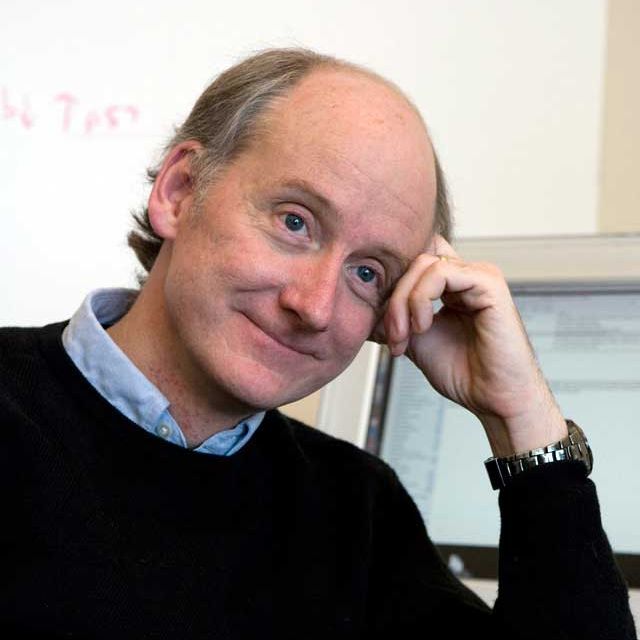
Dr. Thomson is a professor in the University of California's Department of Molecular and Cellular Biology, where he serves as co-director of the Center for Stem Cell Biology and Engineering. He is Director of Regenerative Biology at the Morgridge Institute for Research and a professor at the University of Wisconsin School of Medicine and Public Health. Thomson graduated with a B.S. in biophysics from the University of Illinois in 1981, a doctorate in veterinary medicine in 1985, and a doctorate in molecular biology in 1988 from the University of Pennsylvania. In 1998, Dr. Thomson became the first person to derive human embryonic stem (ES) cells. In 2007, Dr. Thomson's group reported the first isolation of induced human pluripotent stem cells contemporaneously with Dr. Shinya Yamanaka. He is a member of the National Academy of Sciences and recent recipient of numerous awards, including the Lois Pope LIFE International Research Award, the Frank Annunzio Award, the Massry Prize, King Faisal International Prize for Medicine, and the Albany Medical Center Prize in Medicine and Biomedical Research.
My research focuses on understanding how a cell can maintain or change identity, how a cell chooses between self-renewal and the initial decision to differentiate, and how a differentiated cell with limited developmental potential can be reprogrammed to a pluripotent cell.
My current research interests include: Examining the transcriptional networks in ES cells that mediate self-renewal and commitment to each of the basic lineages of the early embryo; mapping the epigenome of ES cells and their early-differentiated derivatives as a participant in the San Diego Epigenome Center; improving methods for generating human iPS cells, and correcting genetic defects in iPS cells generated from patients with degenerative retinal disease; developing new strategies to convert human pluripotent stem and somatic cells into hematopoietic, vascular, and cardiac progenitor cells; and understanding clocking mechanisms that control developmental rates.
Molecular, Cellular, and Developmental Biology •
University of California, Santa Barbara
Copyright © 2013 The Regents of the University of California, All Rights Reserved.
Site Information •
Terms of Use •
Privacy •
Login